No-start diesel checks
Fuel delivery, glow-plug draw, starter load, shutdown inputs, and controller response are checked when the APU will not stay running near Port NOLA and river terminal approaches.
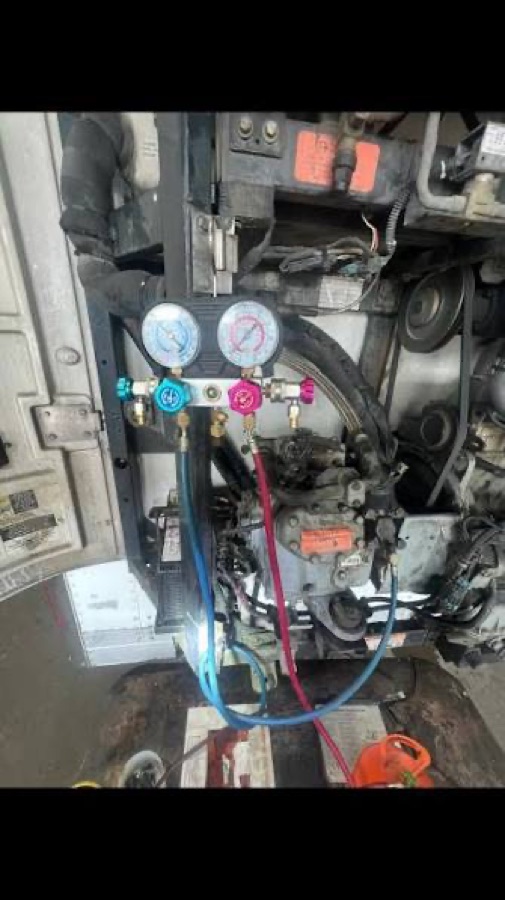
New Orleans roadside and port-area APU repair
Mobile APU repair for trucks around New Orleans, Port NOLA and Mississippi River terminals, I-10, I-610, US Route 90, and nearby freight yards.
Local APU Repair
Repair calls near Port NOLA and Mississippi River terminals start with the failure mode, because container freight, breakbulk, river cargo, refrigerated loads, and Gulf logistics can expose electrical, diesel, airflow, and refrigerant problems at the same time.
Fuel delivery, glow-plug draw, starter load, shutdown inputs, and controller response are checked when the APU will not stay running near Port NOLA and river terminal approaches.
Battery condition, alternator output, ground straps, fuse protection, and harness condition are verified before the climate circuit is blamed in New Orleans.
Belt condition, pulley tracking, condenser fan speed, blower output, and compressor command are inspected when cooling fades during wait time around I-10.
The technician checks voltage recovery, stable APU runtime, blower airflow, and sleeper temperature before the driver returns to Port NOLA and Mississippi River terminals or nearby freight lanes.
New Orleans LA local data
New Orleans calls often involve river-terminal and bridge-route calls need exact approach and parking instructions. Exact staging details help dispatch avoid sending the wrong equipment.
Port NOLA and Mississippi River terminals access or staging-lot details
I-10 and I-610 parking instructions
Port NOLA and river terminal approaches with safe APU-side access
container freight, breakbulk, river cargo, refrigerated loads, and Gulf logistics calls with model and refrigerant-label photos
Service process
Local APU Repair dispatch in New Orleans LA uses the service type, APU brand, refrigerant label, and parking details to send the right mobile setup.
Coverage
These are the local routing signals dispatch asks for before sending a technician.
New Orleans, Elmwood, Westwego, St. Bernard, Chalmette, Metairie, Harvey, and Mississippi River freight lanes
I-10, I-610, US Route 90, Tchoupitoulas Street, Claiborne Avenue freight routes
Port NOLA and river terminal approaches; Elmwood and Harahan warehouse yards; Westwego and Harvey industrial stops; I-10 and US 90 staging
For New Orleans calls, dispatch should know whether the truck is near Port NOLA, Tchoupitoulas, Elmwood, Harvey, I-10, or US 90.
FAQ
Straight answers help avoid the wrong truck, wrong refrigerant, or wrong tool showing up.
Yes, when dispatch coverage and property access allow. Gate rules and a safe parking position should be confirmed first. For New Orleans calls, dispatch also confirms access around Port NOLA and river terminal approaches.
Yes. Share the exit, business name, dock, truck row, and whether the truck can move safely. Near Port NOLA and Mississippi River terminals, this is matched to I-610 parking and gate conditions.
Call for repair if the APU will not start, shuts down, will not charge, has weak airflow, or will not command the compressor. That keeps the service path aligned with container freight, breakbulk, river cargo, refrigerated loads, and Gulf logistics around New Orleans.