Refrigerant identification
The unit label is checked before service so R-134a, R-404A, or a custom application is not mixed with the wrong cylinder in Seattle.
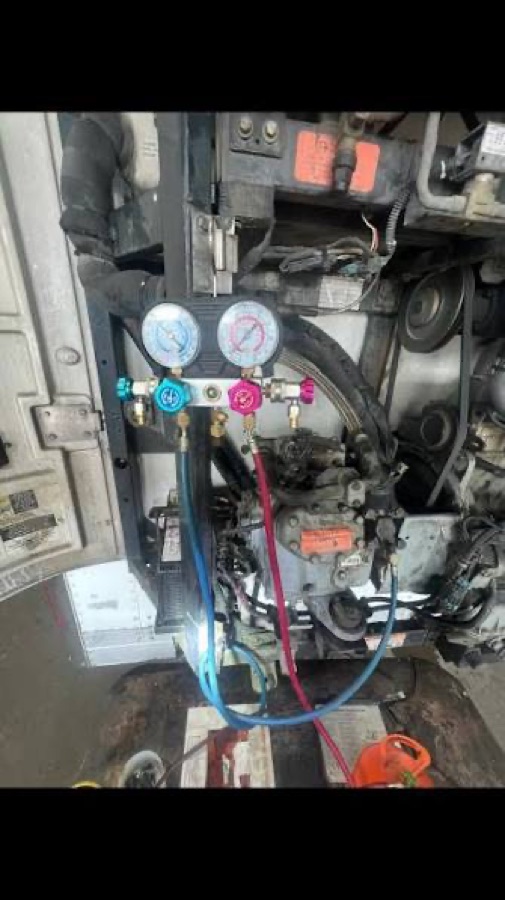
Seattle refrigerant recovery and recharge
APU freon recharge for trucks parked around Port of Seattle, I-5, SR 99, West Seattle Bridge, and local freight yards.
Local Freon Recharge
Freon recharge work near Port of Seattle is handled with refrigerant identification, recovery discipline, vacuum testing, and measured charging so downtime is not repeated.
The unit label is checked before service so R-134a, R-404A, or a custom application is not mixed with the wrong cylinder in Seattle.
Recoverable refrigerant is captured and charging equipment is weighed so the service record reflects what was removed and added. Near Port of Seattle, this is matched to SR 99 parking and gate conditions.
A vacuum pull and hold check help expose moisture, air, or a leak before the truck returns to Port of Seattle freight movement.
Vent temperature, compressor cycling, suction behavior, discharge behavior, and condenser airflow are checked after the charge settles. The result is checked before the truck returns to Harbor Island and Terminal 5 access.
Seattle WA local data
Refrigerant service needs safe access for hoses and recovery equipment, especially around Harbor Island and Terminal 5 access and SODO and Georgetown fleet yards.
Port of Seattle access or staging-lot details
I-5 and SR 99 parking instructions
Harbor Island and Terminal 5 access with safe APU-side access
container freight, Alaska trade lanes, seafood cold-chain, airport cargo, and regional warehouses calls with model and refrigerant-label photos
Service process
Local Freon Recharge dispatch in Seattle WA uses the service type, APU brand, refrigerant label, and parking details to send the right mobile setup.
Coverage
These are the local routing signals dispatch asks for before sending a technician.
Seattle, Harbor Island, SODO, Georgetown, Tukwila, SeaTac cargo lanes, and I-5 freight corridors
I-5, SR 99, West Seattle Bridge, Spokane Street Viaduct, I-90 connectors
Harbor Island and Terminal 5 access; SODO and Georgetown fleet yards; SeaTac cargo-area staging; Tukwila and Kent Valley warehouse routes
For Seattle calls, dispatch should know whether the truck is near Harbor Island, SODO, Georgetown, SeaTac cargo, I-5, or SR 99 before routing service.
FAQ
Straight answers help avoid the wrong truck, wrong refrigerant, or wrong tool showing up.
Yes, when the truck is parked safely and dispatch confirms mobile coverage. For Seattle calls, dispatch also confirms access around Harbor Island and Terminal 5 access.
Dispatch can send the right equipment when the refrigerant label and application are confirmed before arrival. Near Port of Seattle, this is matched to SR 99 parking and gate conditions.
A fast top-off can miss a leak, trap air, or overcharge the circuit. Measured refrigerant service is the safer path. That keeps the service path aligned with container freight, Alaska trade lanes, seafood cold-chain, airport cargo, and regional warehouses around Seattle.